Table of Contents
Subscribe To Updates
Subscribe To Updates
Beyond Tariffs: Strategic Shifts for Manufacturing Agility in a Changing Trade Environment
Posted by Sadia Waseem

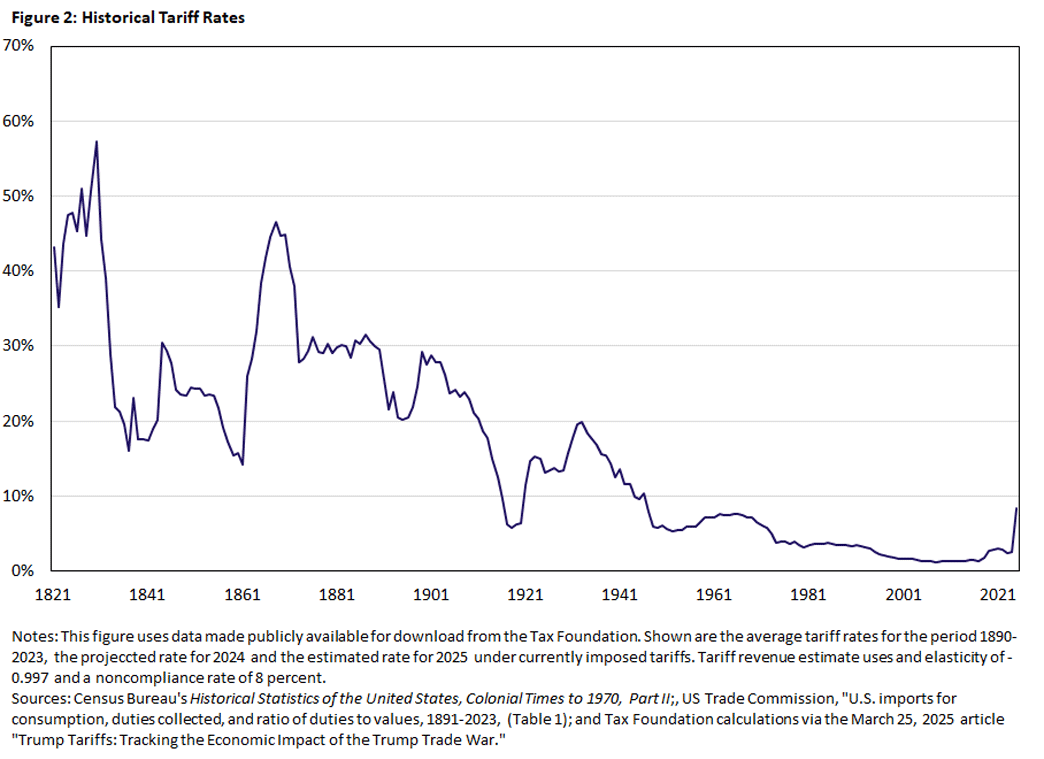
Trade volatility in the U.S. manufacturing industry isn’t just another temporary disruption—it’s the new normal. After years of steady tariff rates, we are witnessing significant increases, with up to 25% increase in tariffs, which according to data isn’t just a temporary disruption.
The rise in tariffs has become a major concern of manufacturers as per the 2025 CFO survey which concluded that more than 30% firms identify tariffs and trade as their most pressing business concern, compared to just 8.3% in the previous quarter.
The concern is justifiable based on past reviews. Between 2018 and 2019, when the U.S. increased tariffs ranging from 10 to 25%, the global supply chain was disrupted, and consumer prices increased. The operational impact is undeniable, since cost of materials are most likely to increase, suppliers to change, materials to be sourced elsewhere; the factory floor feels it immediately.
These adjustments require quick adapting operations, with updated assembly processes, new work instructions, and line balancing calculations. All these challenges require manufacturers to think about how best to respond — not just react — and come out stronger.
Drawing on recent insights and real-world data, this article outlines practical ways to make your assembly operations more agile, more resilient, and ultimately more competitive — regardless of what trade challenges emerge next.
Quick Recap: What’s Changing and Why It Matters
Trade policies have been significantly revised, with the average tariff on U.S. imports rising to 7.1% in early 2025 from 2.2% in 2024. This translates to both operational shifts and financial impacts for manufacturers. The effect can be seen in both the supply chain and factory floor. Here’s a brief recap of key changes and their impact:
1. Manufacturers are expanding or changing their supplier geographics. They are diversifying to regions with lower or no tariff exposure. For instance, a major US toymaker is accelerating its shift of manufacturing operations from China to other countries. The shift is to avoid reliance on one single region. A University of California report found one-third of suppliers are reconsidering their sourcing and distribution strategies. However, this transition cannot be immediate, as highlighted by an executive in heavy equipment manufacturing, who stated that changing supply bases with heavy manufacturing typically requires 1-2 years for full implementation. The long timeline creates a hybrid transitional period where teams must manage components from existing and new suppliers.
2. Another practical change is product design modification. Companies are reducing packaging sizes to minimize shipping weight and volume while also switching to less expensive materials to mitigate tariff impacts. For instance, some are transitioning from plastic to cardboard packaging inserts to cut costs and adapt to material availability. Another major change that manufacturing companies are focusing on is to eliminate non-essential product features like removing accessories or decorative elements that are subject to higher duties. One of the manufacturers used slightly thinner paper in an 80-page project book to prevent a $10 price increase due to tariffs. These minor design changes require coordinated changes in the manufacturing process.
3. These supplier and product changes naturally change inventory strategies and production planning, Some of the manufacturers are reported to stock-up material before the tariff takes effect. However, stockpiling is only a temporary solution and leads to higher handling costs and tied-up capital. Beyond this short-term approach, manufacturers are developing longer-term strategies to reevaluate inventory levels and adjust lead times to manage uncertainty. These strategic shifts create new production planning requirements that factory managers must address.
The impact of these upstream changes cascades down to factory floors in predictable ways.
- Assembly lines need a faster rebalancing mechanism when components change.
- Workers require updated and dynamic SOPs to handle different materials.
- Quality parameters must adjust to new supplier specifications.
- Workstations often need ergonomic recalibration.
The key insight for manufacturing operations becomes clear: volatility at the supply chain level must be met with agility at the operations level. The next section explores how forward-thinking manufacturers are building this crucial operational agility.
Three Strategic Shifts for Resilient Assembly Operations
To survive and thrive in the current tariffs situations, manufacturers need to redefine their assembly operations in strategic ways. The following three shifts can make your assembly lines more resilient against tariffs and disruptions caused by it:
Build for Flexibility, Not Just Efficiency:
When external conditions are unpredictable, internal flexibility becomes a competitive advantage. Traditional manufacturing has focused on efficiency, but today’s environment demands operations that can reconfigure quickly when upstream changes occur.
Embrace modularity in workstation layouts and processes
The days of a single product, single-purpose assembly line are fading. Now, more manufacturers require mixed-model and modular assembly lines that enable rapid changeovers and adjustments:
- Use standardized, movable fixtures that facilitate component variations.
- Create workstation layouts that can be easily rearranged when process steps change.
- Implement quick-release fixtures and modular jigs that can be reconfigured quickly.
Digitize work instructions to remove training bottlenecks
Paper-based work instructions can become a major liability when processes change frequently. Digital work instructions (DWIs) are replacing static work instruction with interactive, multimedia guidance:
- Updates can be deployed instantly across multiple stations.
- Training time for new operators decreases significantly.
- Workers can follow visuals or videos on the spot to reduce ambiguity and errors.
Layer in real-time worker guidance
Even with updated instructions, workers face difficulty in adapting when processes change. Modern assembly operations are implementing Augmented Reality (AR) and visual guidance systems that:
- Provide step-by-step visual cues at the workstation.
- Verify correct part selection and placement.
- Alert operators to potential errors before they occur.
Invest in systems that make process changes “plug and play”
A PwC survey indicates that manufacturers investing 3% or more of revenue in digital transformation are 2.5 times more likely to achieve higher returns. The goal is to create systems where change feels normal rather than disruptive:
- Standardize how processes are documented and how changes are communicated.
- Train teams on adaptation rather than just specific processes.
- Build a culture where adjusting to new components or procedures is routine.
2. Replace Manual Process Assessment with Smart, Scalable Tools
Traditional improvement methods often rely on manual data collection methods. It usually involves engineers with stopwatches, spreadsheets of timings, and lengthy walkthroughs. These approaches are increasingly inadequate for the pace of change required.
Instantly capture time studies through video
AI-powered video analytics can break down processes into elemental steps and provide accurate timing data in minutes rather than days:
- Tasks that traditionally took weeks can be analyzed in hours.
- Multiple process variants can be compared simultaneously.
- Engineers can focus on problem-solving rather than data collection.
Analyze ergonomics for new tasks or materials
When materials or components change, ergonomic risks often occur. AI tools can assess movements and postures to identify potential issues before they lead to injuries or quality problems:
- Ergonomic assessment methods that traditionally required significant time and lengthy calculations can be completed in minutes.
- Systems can instantly flag when a material substitution creates a high-risk movement.
- Recommendations for workstation adjustments are generated automatically.
Identify bottlenecks when supplier inputs change
Supply chain shifts often create unexpected bottlenecks as materials with different characteristics move through existing processes:
- AI analysis can quickly identify where flow breaks down.
- Simulations can test multiple alternatives before implementation.
- Line rebalancing can be completed in days instead of weeks.
3. Empower Your Teams to Make Fast, Informed Decisions
In volatile trade environments, quick response becomes a competitive advantage. Yet many manufacturers still struggle with information bottlenecks that slow response times.
Give frontline teams better access to insights
According to a recent Manufacturing Leadership Council survey, 77% of companies say data-driven decisions are primarily made by managers, and only 33% delegate that to factory-floor employee, suggesting untapped potential to empower teams:
- Install dashboards on the shop floor that track key performance indicators.
- Ensure operators have access to the sufficient data.
- Create transparent visibility into supply chain changes and their impacts.
Standardize data capture for consistency
When every team captures process information differently, comparing before-and-after conditions becomes nearly impossible:
- Implement standard formats for documenting processes (e.g., short cycle videos).
- Create common metrics for evaluating changes.
- Establish shared libraries of process knowledge.
Equip continuous improvement teams with AI copilots
Even the most skilled industrial engineers can be overwhelmed by the volume of data gathering and analysis required during major supply chain shifts:
- AI-driven dashboards help engineers focus on solutions rather than data processing.
- Digital assistants can suggest improvements based on historical patterns.
- Automated reporting tracks the impact of changes.
By implementing these three strategic shifts, manufacturers can build operations that not only withstand supply chain volatility but potentially turn disruption into a competitive advantage.
Mindset Shift: Turn Disruption into a Competitive Edge
Apart from the above strategies, the most powerful tool to turn disruption into a competitive edge is mindset shift. Leading manufacturers recognize trade disruptions not as threats but as opportunities to gain a competitive advantage.
Recent analysis by Deloitte confirms that manufacturers with flexible, multi-location production footprints could shift production and actually gain market share from less agile competitors during tariff shake-ups. These manufacturers turned challenges into an opportunity for improvement by adapting as per the operational flexibility when others couldn’t.
The current wave of disruption provides a perfect opportunity to modernize legacy practices. This includes shifting to digital, scalable operations that creates value far beyond surviving the next tariff announcement. For example, implementing cloud-based manufacturing execution systems or IoT sensors for tracking isn’t just about reacting faster; it can also improve efficiency and lower costs in stable times.
Evidence from McKinsey & Company reinforces this approach, showing that companies with leading digital and AI capabilities outperform laggards by two to six times on total shareholder returns across every sector analyzed. Investments in these digital technologies provide dual benefits, they make operations more efficient during volatile periods while fostering continuous improvement in your operational foundation.
The concern isn’t whether your operations will face further volatility, because they will. The question is whether you’ll use this moment as a catalyst to build lasting competitive advantages that extend far beyond the current trade situation.
Conclusion
Supply chain uncertainty isn’t a temporary wave of disruption — it’s here to stay whether from tariffs, global instability, or shifting consumer demand. The factories that will pass through this uncertainty would be those that can reconfigure quickly, identify problems early, and continuously optimize with minimal disruption.
Resilience is the key here, and to begin with resilient manufacturing operations, consider these practical steps:
Start with auditing your current process adaptability. It can include analyzing how long it currently takes to rebalance a line when a component changes or how quickly you can train operators on new procedures. These baseline metrics will help you identify your biggest opportunities for improvement.
Look for tools that reduce or eliminate your data collection time. Automated data collection leads to spending time on improvement opportunities. Every hour spent manually gathering process information is an hour not spent implementing solutions.
Finally, start small but think big. Test new approaches on a single process or line, measure the improvements in responsiveness, and then expand.
The goal isn’t just to solve today’s tariff-related challenges but to build capabilities that turn operational agility into a sustainable competitive advantage. As you implement these changes, you’ll not only thrive in current uncertainty but position your manufacturing operations to excel in an increasingly dynamic global market.
To learn more about AI solutions that can help your operations stay competitive, agile, and efficient, visit Retrocausal.ai.